
Top 10 Pharmacy POS Software Systems for Modern Pharmacies

A pharmacy POS system is no longer just a checkout tool. In modern pharmacy operations, it functions as a critical control point that affects workflow speed, inventory accuracy, customer experience, and operational visibility. When the right system is in place, it helps pharmacies reduce manual errors, improve staff coordination, and maintain a more reliable day-to-day process across both prescription and front-of-store activity. Choosing a pharmacy POS, therefore, should not be treated as a simple retail software decision. Pharmacies operate in a more demanding environment where workflow clarity, stock control, reporting, staff accountability, and transaction accuracy all matter. Together with GritGlobal, let’s explore the top pharmacy POS software systems for modern pharmacies and what makes each one relevant for different business needs. What is pharmacy POS software? Pharmacy POS software is a specialized point-of-sale system designed to support the operational needs of pharmacies. Unlike a standard retail POS, it works alongside prescription handling, regulated product management, signature capture, customer-facing service, and pharmacy workflow processes. In practice, pharmacy POS software helps businesses manage more than transactions. It supports the daily structure that allows the pharmacy to run accurately, efficiently, and with better control. Why pharmacies need a specialized POS system A standard POS may be sufficient for general retail, but pharmacies require more robust operational support. They work in an environment where accuracy, speed, and workflow coordination matter far more. A specialized pharmacy POS can help support: For both independent pharmacies and larger chains, the right POS can reduce friction at the counter while strengthening back-office control. Key features to look for in pharmacy POS software Before comparing providers, it is important to understand what matters most in a pharmacy setting. Prescription workflow support A strong pharmacy POS should fit naturally into the prescription process rather than interrupting it. Inventory management The system should accurately track prescription products as well as front-of-store and over-the-counter items. Compliance support Pharmacies need a tighter structure and clearer controls than standard retail operations. Payment flexibility The POS should support multiple payment methods and pharmacy-specific transaction needs. Signature capture This is especially important for prescription pickup and customer verification. Reporting and operational visibility Managers need clear insights into sales, inventory, staff activity, and workflow performance. Integration capability The most effective systems support pharmacy operations as part of a connected workflow, not as a disconnected checkout layer. Top pharmacy POS software solutions to consider 1. Liberty Software Liberty Software is a strong option for independent pharmacies that want dependable workflow support and operational consistency. One of its main advantages is that it helps staff clearly understand where each prescription stands in the process, making it easier to manage busy periods. Best for: Independent pharmacies that need dependable workflow visibility Strengths: 2. BestRx BestRx is often a practical choice for smaller and community pharmacies looking for a straightforward, cost-conscious system. It focuses on core pharmacy workflows and is well-suited to businesses that value simplicity and stability over complexity. Best for: Smaller independent and community pharmacies Strengths: 3. PioneerRx PioneerRx is a strong fit for pharmacies that want deeper workflow visibility and stronger operational control. It is often better suited to high-volume pharmacies that require more detailed reporting and tighter staff coordination. Best for: High-volume independent pharmacies Strengths: 4. SuiteRx SuiteRx is a good option for pharmacies with more specialized workflows, such as specialty pharmacy, compounding, or delivery-focused operations. Its value lies in helping businesses manage more complex pharmacy processes with greater control. Best for: Specialty pharmacies and complex pharmacy environments Strengths: 5. Datascan Pharmacy Software Datascan is a workflow-focused pharmacy software solution that helps teams manage prescription activity more clearly. It is a practical choice for pharmacies that want stronger structure and visibility in daily operations. Best for: Pharmacies that need clearer workflow management Strengths: 6. SRS Pharmacy Systems SRS Pharmacy Systems is particularly relevant for long-term care pharmacy settings. It is designed to support workflows that differ from a standard retail pharmacy model, making it more suitable for specialized care environments. Best for: Long-term care pharmacies Strengths: 7. PrimeRx PrimeRx is a solid choice for pharmacies that need better workflow coordination and staff visibility. Its structured setup helps teams stay organized during busy shifts and reduces confusion across tasks. Best for: Pharmacies needing stronger team workflow management Strengths: 8. Computer-Rx Computer-Rx is often valued for speed and efficiency in pharmacy workflows. This makes it especially useful for pharmacies handling a high volume of prescriptions and needing quicker operational movement. Best for: Pharmacies focused on dispensing speed Strengths: 9. QS/1 QS/1 is known for reliability and operational consistency. In pharmacy environments, system stability is especially important because downtime can interrupt both prescription handling and customer service. Best for: Pharmacies that prioritize stability Strengths: 10. ConnectPOS ConnectPOS is a strong option for pharmacies that want more than a basic checkout tool and need better control over retail operations, inventory, and omnichannel processes. While it is widely recognized as a retail POS solution, it can also be highly valuable for pharmacy businesses that need a modern system to support both in-store efficiency and connected operations. One of the key strengths of ConnectPOS is its ability to unify sales, inventory, customer data, and store operations in one system. For pharmacies managing both front-of-store items and more complex product tracking needs, this helps improve inventory accuracy and reduce operational gaps. ConnectPOS also supports real-time synchronization, which is valuable for pharmacies that need stronger stock visibility and smoother transaction handling. Its reporting and analytics tools help managers monitor store activity, review sales performance, and make better operational decisions. For pharmacies with multiple locations or omnichannel needs, ConnectPOS offers stronger coordination across stores and channels. Best for: Pharmacies that want stronger retail operations and omnichannel support Strengths: How to choose the right pharmacy POS software The best pharmacy POS depends on your size, operational model, and workflow complexity. Choose a workflow-focused system if: Choose a specialized system if: Choose a scalable system if: Choose a flexible retail solution if: Common mistakes to avoid A
White Label POS: What It Is, How It Works, and Top Providers to Consider
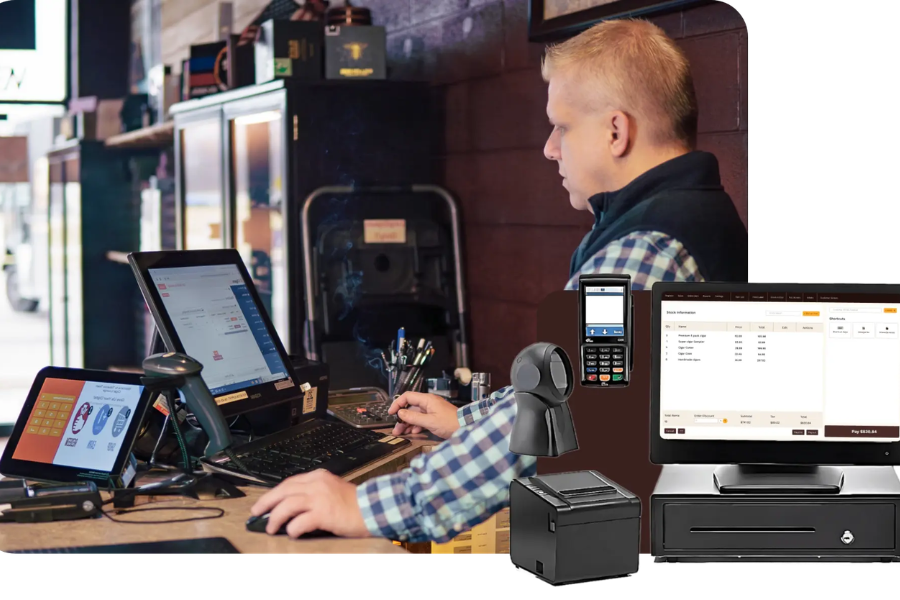
As more businesses look for faster ways to launch branded retail technology, white label POS has become an increasingly attractive option. Instead of building a point-of-sale system from scratch, companies can use an existing platform, customize it under their own brand, and bring it to market more efficiently. This approach is especially valuable for payment providers, software companies, and retail solution businesses that want to expand their service offerings without taking on the full burden of product development. Together with GritGlobal, let’s explore what white label POS is, how it works, why it matters, and which providers businesses should consider when building a branded POS solution. What is a white label POS? A white label POS is a point-of-sale system developed by one company and rebranded by another company as its own product. The reseller or partner can usually customize the branding, interface, pricing model, and sometimes selected features, while the original provider maintains the core software and infrastructure. In simple terms, white label POS allows a business to offer a POS solution under its own name without having to build the entire system from the ground up. How does a white label POS work? A white label POS model usually works through three main layers. 1. The provider builds the core system The POS provider develops and maintains the platform, including software architecture, updates, security, reporting, integrations, and operational stability. 2. The partner applies its own brand The reseller or partner customizes the solution with its own logo, brand identity, pricing structure, and market positioning. 3. Merchants use the branded solution End users interact with the system as if it were the reseller’s own POS product, even though the backend technology is powered by a third-party provider. This model helps businesses enter the POS market more quickly while still presenting a consistent branded experience to customers. Why businesses choose white label POS White label POS is becoming more popular because it offers a practical balance between speed, control, and scalability. Faster time to market Developing a POS system from scratch can take significant time and resources. White label POS allows businesses to launch much faster. Lower development costs Instead of building the entire platform internally, companies can reduce technical costs and focus on branding, sales, and customer acquisition. New revenue opportunities A white label POS can open multiple revenue streams, including software subscriptions, implementation services, hardware sales, and payment-related income. Stronger brand ownership Rather than sending customers to an outside POS vendor, businesses can provide a solution under their own brand and strengthen long-term customer relationships. Easier market expansion For businesses entering retail technology, payments, or merchant services, white label POS offers a more accessible path to growth. Who should consider a white label POS? White label POS can be a strong fit for: Any company that wants to offer a POS solution without carrying the full product development burden may benefit from this model. Key features to look for in a white label POS Not all white label POS solutions offer the same level of flexibility. Choosing the right provider means looking beyond branding alone. Branding customization A strong white label POS should allow businesses to customize logos, colors, interface elements, and overall brand presentation. Payment integration For many businesses, payment capability is a major part of the value proposition. A good white label POS should support flexible payment integration. Inventory and reporting A POS still needs to function as a serious retail tool. Inventory control, sales tracking, and reporting are essential. Multi-location support If your target merchants operate more than one store, multi-location visibility becomes highly important. API and integration capability Businesses often need to connect the POS with ecommerce platforms, ERP systems, CRM tools, or other third-party applications. Scalability The right platform should not only fit current needs but also support future growth as the business expands. Benefits of white label POS for modern businesses A white label POS is not just a shortcut. It can also be a strategic business decision. For companies looking to serve merchants, it provides a ready-made foundation for delivering retail technology with their own identity. For growing businesses, it helps shorten launch time, reduce risk, and bring services to market more efficiently. For merchants, it can provide a branded, reliable solution backed by proven technology. This is why white label POS is becoming more relevant in today’s market. Businesses want faster product deployment, more predictable costs, and stronger commercial control without sacrificing software quality. White label POS vs building your own POS Businesses considering a white label POS often compare it with building a POS platform from scratch. Building your own POS This offers maximum control, but it also requires significant investment in software development, infrastructure, security, maintenance, updates, and support. Using a white label POS This reduces the development burden and speeds up launch, but businesses may have less control over the platform’s core architecture and roadmap. For many companies, the white label model is the more practical starting point, especially when speed, efficiency, and market entry matter most. Common challenges of white label POS White label POS offers many benefits, but it is not without limitations. Limited customization in some cases Some providers allow only surface-level branding, while deeper customization may be restricted. Dependence on the provider Because the infrastructure is maintained by a third party, the reseller depends on that provider’s reliability, roadmap, and support quality. Variable pricing structures Costs may include setup fees, monthly platform fees, licensing costs, hardware requirements, or fees for custom integrations. Support expectations Businesses need clarity on who handles onboarding, technical issues, and ongoing product support. These are not deal-breakers, but they are important to evaluate before choosing a provider. Top white label POS providers to consider If your business is looking for a branded POS solution, several providers stand out in the market. 1. ConnectPOS ConnectPOS is one of the strongest options for businesses that want more than a basic white label POS. It is especially suitable for retailers and
