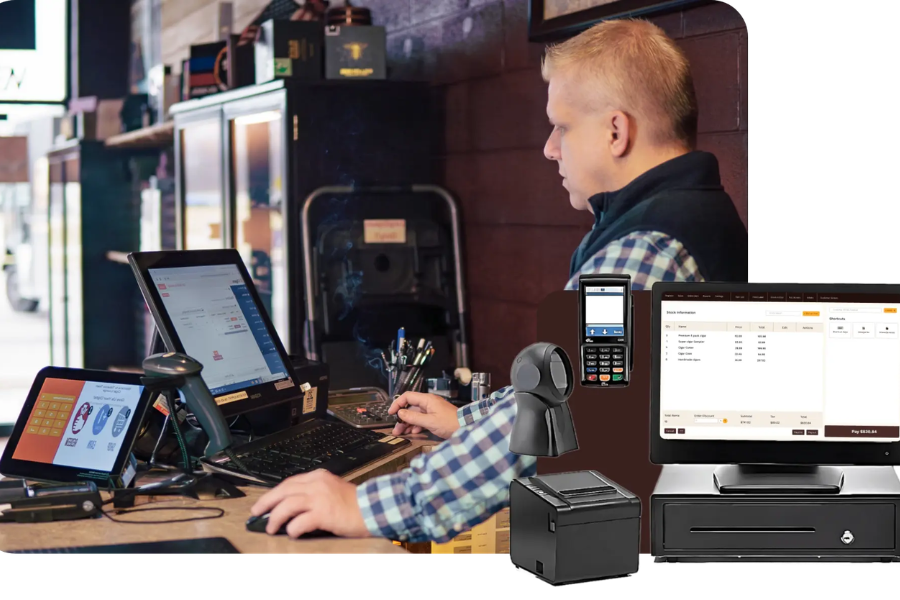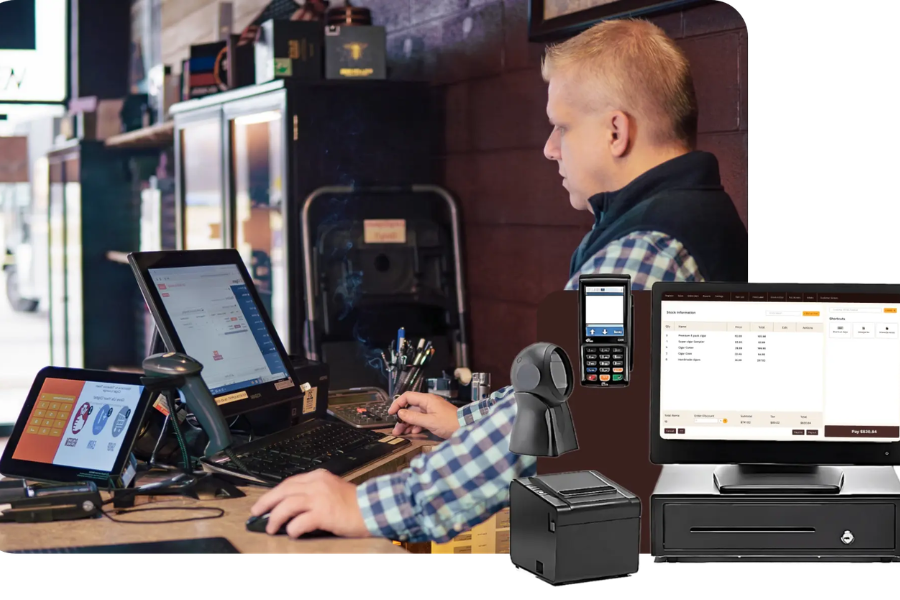
As more businesses look for faster ways to launch branded retail technology, white label POS has become an increasingly attractive option. Instead of building a point-of-sale system from scratch, companies can use an existing platform, customize it under their own brand, and bring it to market more efficiently. This approach is especially valuable for payment providers, software companies, and retail solution businesses that want to expand their service offerings without taking on the full burden of product development.
Together with GritGlobal, let’s explore what white label POS is, how it works, why it matters, and which providers businesses should consider when building a branded POS solution.
What is a white label POS?
A white label POS is a point-of-sale system developed by one company and rebranded by another company as its own product. The reseller or partner can usually customize the branding, interface, pricing model, and sometimes selected features, while the original provider maintains the core software and infrastructure.
In simple terms, white label POS allows a business to offer a POS solution under its own name without having to build the entire system from the ground up.
How does a white label POS work?
A white label POS model usually works through three main layers.
1. The provider builds the core system
The POS provider develops and maintains the platform, including software architecture, updates, security, reporting, integrations, and operational stability.
2. The partner applies its own brand
The reseller or partner customizes the solution with its own logo, brand identity, pricing structure, and market positioning.
3. Merchants use the branded solution
End users interact with the system as if it were the reseller’s own POS product, even though the backend technology is powered by a third-party provider.
This model helps businesses enter the POS market more quickly while still presenting a consistent branded experience to customers.
Why businesses choose white label POS
White label POS is becoming more popular because it offers a practical balance between speed, control, and scalability.
Faster time to market
Developing a POS system from scratch can take significant time and resources. White label POS allows businesses to launch much faster.
Lower development costs
Instead of building the entire platform internally, companies can reduce technical costs and focus on branding, sales, and customer acquisition.
New revenue opportunities
A white label POS can open multiple revenue streams, including software subscriptions, implementation services, hardware sales, and payment-related income.
Stronger brand ownership
Rather than sending customers to an outside POS vendor, businesses can provide a solution under their own brand and strengthen long-term customer relationships.
Easier market expansion
For businesses entering retail technology, payments, or merchant services, white label POS offers a more accessible path to growth.
Who should consider a white label POS?
White label POS can be a strong fit for:
- payment processors
- ISOs
- SaaS businesses
- retail technology companies
- agencies serving merchants
- entrepreneurs launching a branded POS business
Any company that wants to offer a POS solution without carrying the full product development burden may benefit from this model.
Key features to look for in a white label POS
Not all white label POS solutions offer the same level of flexibility. Choosing the right provider means looking beyond branding alone.
Branding customization
A strong white label POS should allow businesses to customize logos, colors, interface elements, and overall brand presentation.
Payment integration
For many businesses, payment capability is a major part of the value proposition. A good white label POS should support flexible payment integration.
Inventory and reporting
A POS still needs to function as a serious retail tool. Inventory control, sales tracking, and reporting are essential.
Multi-location support
If your target merchants operate more than one store, multi-location visibility becomes highly important.
API and integration capability
Businesses often need to connect the POS with ecommerce platforms, ERP systems, CRM tools, or other third-party applications.
Scalability
The right platform should not only fit current needs but also support future growth as the business expands.
Benefits of white label POS for modern businesses
A white label POS is not just a shortcut. It can also be a strategic business decision.
For companies looking to serve merchants, it provides a ready-made foundation for delivering retail technology with their own identity. For growing businesses, it helps shorten launch time, reduce risk, and bring services to market more efficiently. For merchants, it can provide a branded, reliable solution backed by proven technology.
This is why white label POS is becoming more relevant in today’s market. Businesses want faster product deployment, more predictable costs, and stronger commercial control without sacrificing software quality.
White label POS vs building your own POS
Businesses considering a white label POS often compare it with building a POS platform from scratch.
Building your own POS
This offers maximum control, but it also requires significant investment in software development, infrastructure, security, maintenance, updates, and support.
Using a white label POS
This reduces the development burden and speeds up launch, but businesses may have less control over the platform’s core architecture and roadmap.
For many companies, the white label model is the more practical starting point, especially when speed, efficiency, and market entry matter most.
Common challenges of white label POS
White label POS offers many benefits, but it is not without limitations.
Limited customization in some cases
Some providers allow only surface-level branding, while deeper customization may be restricted.
Dependence on the provider
Because the infrastructure is maintained by a third party, the reseller depends on that provider’s reliability, roadmap, and support quality.
Variable pricing structures
Costs may include setup fees, monthly platform fees, licensing costs, hardware requirements, or fees for custom integrations.
Support expectations
Businesses need clarity on who handles onboarding, technical issues, and ongoing product support.
These are not deal-breakers, but they are important to evaluate before choosing a provider.
Top white label POS providers to consider
If your business is looking for a branded POS solution, several providers stand out in the market.
1. ConnectPOS
ConnectPOS is one of the strongest options for businesses that want more than a basic white label POS. It is especially suitable for retailers and solution providers looking for a system that supports omnichannel operations, real-time synchronization, and flexible store management.
One of the biggest strengths of ConnectPOS is its ability to unify sales, inventory, customer data, and store operations in one connected system. This helps businesses provide a smoother and more scalable retail experience while maintaining stronger operational control.
ConnectPOS also stands out for its real-time synchronization, which improves stock visibility and helps reduce errors between channels. Its reporting and analytics features provide valuable insight into store performance, while its flexibility across devices and retail environments makes it well suited for businesses with long-term growth goals.
For companies that want a white label POS with stronger omnichannel capability and more advanced retail functionality, ConnectPOS is a compelling choice.
2. Quantic POS
Quantic POS is a well-known name in the white label POS space. It is often positioned as a solution for payment processors, ISOs, and businesses that want to launch a branded POS quickly.
Its value lies in white-label customization, merchant onboarding support, and scalable deployment. Businesses looking for fast market entry may find Quantic POS particularly relevant.
3. SalesPlay
SalesPlay is another notable provider with a strong focus on reseller and partner programs. It supports businesses that want to launch a branded POS solution with custom branding, flexible pricing, API support, and partner enablement.
For businesses that prioritize reseller growth and faster go-to-market execution, SalesPlay can be an attractive option.
4. AireusPOS
AireusPOS is often seen as a practical white label POS option for businesses that want to launch under their own brand while maintaining pricing control and customer ownership.
Its appeal lies in simplicity and accessibility, making it relevant for companies that want a more straightforward entry into the branded POS market.
How to choose the right white label POS provider
The best white label POS is not always the one with the longest feature list. It is the one that fits your business model and growth strategy.
When comparing providers, ask these questions:
How much branding control do you need?
Some businesses only need logo-level customization, while others need a much deeper brand experience.
Do you want to monetize payments?
If payment revenue is a major goal, payment flexibility should be a top consideration.
Who are your target merchants?
The best white label POS for restaurants may not be the best fit for retail stores or omnichannel merchants.
How fast do you need to launch?
Some providers are better suited for rapid deployment, while others may involve more configuration.
How scalable is the platform?
A good solution should support not only your launch phase but also your long-term expansion.
Why ConnectPOS stands out among top white label POS providers
Among the leading options, ConnectPOS stands out for businesses that need stronger omnichannel capabilities, real-time synchronization, and more advanced retail operations within a branded POS environment.
It is not just a rebranded checkout tool. It is a broader retail solution that helps businesses connect online and offline sales, improve inventory accuracy, manage store performance, and create a more seamless customer experience.
For companies that want a white label POS capable of supporting serious retail growth, ConnectPOS offers a stronger operational foundation than many simpler alternatives.
Conclusion
White label POS is becoming a smarter path for businesses that want to launch a branded point-of-sale solution without building one from scratch. It offers faster time to market, lower development burden, stronger brand ownership, and new revenue opportunities.
For payment companies, software providers, and retail solution businesses, the value is clear. A white label POS can help you serve merchants more effectively while keeping the product experience under your own brand.
Among the top providers in the market, ConnectPOS, Quantic POS, SalesPlay, and AireusPOS are notable options to consider. However, for businesses that want a stronger combination of omnichannel capability, real-time synchronization, and retail operational depth, ConnectPOS stands out as a particularly strong choice.
If your business is exploring the white label POS model, the key is to choose a provider that supports not only your launch goals but also your long-term growth strategy.