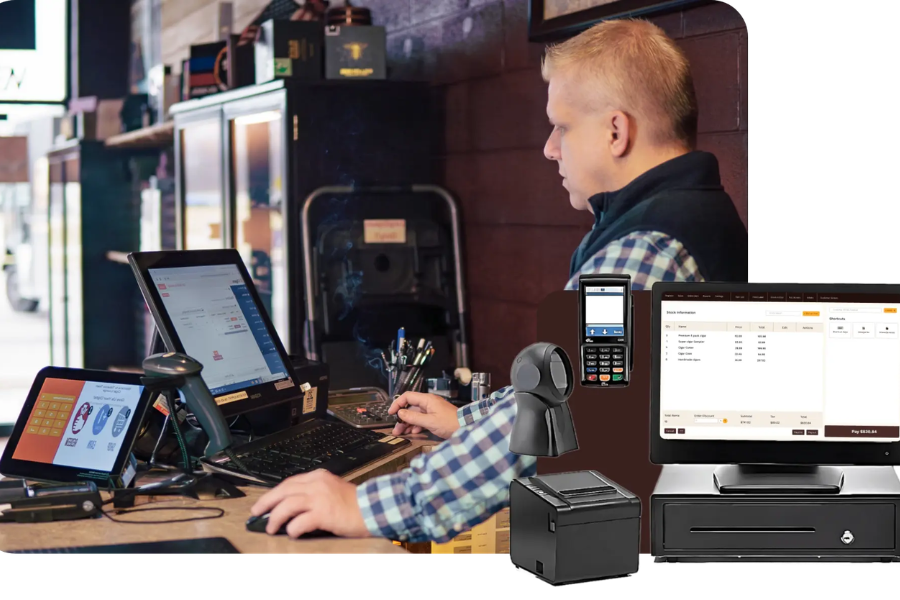
Choosing the right B2B ecommerce platforms can be overwhelming, especially when complex pricing, bulk orders, and system integrations come into play. Many businesses struggle to balance growth with efficiency, which makes the platform decision even harder. This guide from GritGlobal will break down everything you need to know so you can pick the best fit for your business.
Highlights
- B2B ecommerce platforms handle complex needs like bulk pricing, multi-user accounts, and advanced order management.
- Choosing the right B2B platform requires attention to search tools, catalog personalization, integrations, payment flexibility, and security.
- Leading B2B platforms for enterprise businesses include BigCommerce Wholesale App, Commercetools, Shopify Plus, Magento (Adobe Commerce), and SAP Commerce Cloud.
What Is a B2B Ecommerce Platform?
A B2B ecommerce platform is cloud-based software that helps companies sell directly to other businesses. It lets businesses set up a digital store, update product catalogs, handle sales, process payments, and support buyers after purchase.
Unlike standard retail ecommerce, these platforms often restrict certain sections to approved buyers. Access usually requires login credentials, which are granted only to verified companies and their representatives. In fact, McKinsey notes that 57% of B2B decision makers are most comfortable transacting on supplier sites that sit behind a paywall. This is exactly the model most B2B portals use.
Once logged in, buyers can see negotiated pricing, specialized products, and tailored order terms. Since B2B sales often involve large orders, contracts, and repeat purchasing, the process needs functions far beyond what consumer-focused platforms provide.
Types Of B2B Ecommerce Platforms
Different companies use different models depending on how they sell and serve customers. The main types are:
- Marketplaces: Platforms that bring together many buyers and sellers. They act as middlemen and examples include Amazon Business and Alibaba.
- Distributors: Firms that buy products from manufacturers and resell them. They handle stock, shipping, and logistics for their buyers.
- Manufacturers: Producers that sell straight to other businesses without intermediaries. They often provide volume discounts and custom pricing terms.
- Wholesalers: Businesses that purchase goods in large amounts and resell them in bulk. Their pricing model lowers the cost per unit for retailers.
What Sets B2B Ecommerce Platforms Apart From B2C?
By volume, the B2B ecommerce market is estimated to be roughly four times larger than B2C. B2B ecommerce platforms function on a larger scale and with greater complexity than consumer-focused systems. While B2C stores often rely on impulse buys and one-off transactions, B2B platforms are built to handle group decision-making, long-term buyer relationships, and structured pricing models.
1. Pricing And Purchase Complexity
B2B sales require flexible pricing rules that go beyond fixed retail rates. Companies often rely on:
- Bulk discounts for customers placing high-volume orders.
- Tiered pricing that shifts based on quantities or contract terms.
- Negotiated rates crafted for loyal or long-term partners.
- Account-specific pricing tied to pre-approved deals.
Take an industrial supplier as an example. A small business may get a standard rate for a few units, a regional distributor may see a lower tier, while a global buyer secures a custom contract.
A capable B2B ecommerce platform automates these pricing layers, making sure each buyer views the correct terms without manual adjustments.
2. Buyer Account Management
B2B customers usually purchase as part of a team rather than as individuals. This requires:
- Multi-user accounts or where roles like buyers, managers, or finance staff have different permissions.
- Approval steps that let orders be created, reviewed, and cleared before payment
- Repeat order tools including saved shopping lists, approved catalogs, and purchase history tracking.
Personalization also takes on a different meaning. In B2C, it often means showing suggestions based on browsing or past purchases. In B2B, it focuses on surfacing the right products and negotiated pricing according to the buyer’s company, industry, or role.
3. Order Management Requirements
B2B transactions are usually high-volume, recurring, and demand careful fulfillment. A strong B2B ecommerce platform should provide:
- Fast reordering so buyers can repeat past purchases with just a few clicks.
- Approval processes that keep purchasing aligned with company policies.
- Recurring order tools to support ongoing contracts and scheduled supply needs.
- Quote handling that lets buyers request prices before placing an order.
- Location-based routing to send orders to the right warehouse or supplier based on region and stock levels.
Benefits Of Using Modern B2B Ecommerce Platforms
Modern B2B ecommerce platforms give buyers the digital-first experience they now expect, along with several business gains:
- Wider reach and customer growth: Selling online removes regional limits, helping businesses scale beyond in-person sales. In the U.S. alone, B2B ecommerce site sales grew 10.5% year over year in 2024 to $2.297 trillion, signaling sustained demand for digital buying.
- Higher average order value (AOV): Volume discounts, tailored suggestions, and upsell tools increase spending per order. Canadian chain Princess Auto raised AOV by using AI-driven search and product recommendations that guided buyers toward complementary items.
- Lower sales and service costs: Self-service portals and smart search tools cut down on manual support, letting sales teams focus on priority clients.
- Shorter sales cycles: Real-time pricing, inventory visibility, and automated approvals reduce delays in complex B2B purchases.
- Improved buyer loyalty: Customized catalogs, consistent contract pricing, and targeted personalization create stronger satisfaction and retention. A McKinsey review found 54% of B2B buyers will walk if the omnichannel experience falls short, while faster-growing companies derive 40% more revenue from personalization than slower peers.
- Greater operational efficiency: Automation in merchandising and procurement cuts repetitive tasks for internal teams.
- Smarter decision-making: Data on buyer behavior, order patterns, and search trends helps refine pricing and discount strategies.
Key Considerations When Choosing B2B Ecommerce Platforms
When reviewing B2B ecommerce platforms, it’s important to match their functions with buyer needs.
Search And Discovery Partnerships
B2B buyers usually search with part numbers, SKUs, or technical filters. That makes strong product discovery tools essential. The right system should:
- Work with detailed product data and show related items like compatible parts or accessories.
- Understand industry-specific terms so buyers see accurate results across different query styles.
- Apply AI-driven ranking to highlight the most relevant products based on past behavior and purchase history.
Order Processing Tools
B2B sales often include bulk orders, recurring purchases, and structured approvals. A capable B2B ecommerce platform should:
- Allow fast reordering for frequent buyers.
- Apply automated discounts on large orders tied to contract terms.
- Include order tracking, scheduling, and approval steps to simplify procurement.
Customized Catalogs
Unlike consumer stores where every visitor sees the same range, B2B ecommerce platforms must deliver tailored catalogs. Key functions include:
- Role-based access so teams only view approved products and pricing.
- Saved lists and favorites that make repeat ordering faster.
- Buyer-specific catalogs tied to contracts or negotiated terms.
AI-driven personalization also supports buyers by surfacing relevant items quickly, cutting search time and raising order value.
System Integration
A strong platform connects smoothly with core business tools, including:
- ERP systems for real-time stock and order updates.
- CRM platforms to track and manage customer interactions.
- Accounting and tax software to simplify financial workflows.
- Inventory management for accurate visibility across warehouses.
- Search and discovery solutions to improve catalog accessibility.
An integrated setup keeps data consistent across systems, lowering mistakes and improving efficiency.
Payment Options
B2B transactions demand more flexibility than basic card payments. A capable B2B ecommerce platform should support:
- Account billing with approved credit terms.
- Purchase orders (POs) and payments in different currencies.
- Automated tax handling to simplify invoicing across regions.
Security Standards
B2B deals often include sensitive pricing, contracts, and financial data. To protect trust and long-term relationships, the platform must:
- Use encryption and strict access controls for critical data.
- Meet global regulations like GDPR and PCI DSS for payment security.
- Provide user-level permissions to limit unauthorized access.
Extra Considerations
Every business has unique needs, so it’s worth weighing additional factors when selecting a B2B ecommerce platform:
- Implementation speed: How quickly can the system go live? Platforms that support staged rollouts or fast connections help reduce downtime.
- Mobile access: Can buyers and sales staff manage orders on mobile devices? On-the-go access is becoming a standard for B2B sales.
- Post-launch support: Does the provider deliver dependable help when problems occur? A responsive service team keeps operations stable after launch.
Leading B2B Ecommerce Platforms For Enterprise Businesses
Many platforms include B2B functions, but only a few deliver the flexibility and scale needed for enterprise growth.
1. BigCommerce Wholesale App
The BigCommerce Wholesale App from GritGlobal is designed to simplify wholesale operations through automation. Built for growing merchants, it shortens sales cycles and removes manual work from complex B2B tasks.
Key strengths include:
- Customer and account control: Auto-approve new buyers, manage quotes, assign sales reps, and sync company data with CRM tools.
- Automated order handling: Build and update orders, apply company credit, and send real-time alerts to staff and customers.
- Simplified quoting: Approve quotes based on set limits, apply bulk discounts, and notify buyers instantly.
- Custom workflows: Trigger actions when needed, schedule recurring tasks, and automate bulk processes like catalog or inventory updates.
- Wide integrations: Connect with Google Sheets, Slack, Vimeo, Mailchimp, and Klaviyo for cross-platform efficiency.
Brands including Lexair, The Taste of Germany, and Ultralight Outdoor Gear rely on this app, which powers more than 130,000 monthly automations. For B2B sellers on BigCommerce, it’s a complete solution to scale faster and work smarter.
2. Commercetools
Commercetools is a headless, API-first commerce platform built for enterprise-level flexibility. Its modular setup allows companies to tailor every aspect of their store, from pricing structures to product catalogs, without being tied to a rigid system.
3. Shopify Plus
Shopify Plus, once focused mainly on B2C brands, now includes strong B2B capabilities for enterprise sellers. It delivers custom pricing, tailored catalogs for each buyer, and flexible payment methods, all managed through an easy-to-use self-service interface.
4. Magento (Adobe Commerce)
Magento, now under Adobe Commerce, is a customizable platform built for complex B2B needs. It includes native support for contract-based pricing, segmented customer groups, and large-scale inventory control, making it a solid option for businesses seeking a tailored ecommerce solution.
5. SAP Commerce Cloud
SAP Commerce Cloud is an enterprise-focused ecommerce POS platform designed for companies that need advanced ERP connectivity and strong multi-channel selling capabilities.
Typical Challenges When Adopting B2B Ecommerce Platforms
Businesses often face several hurdles when rolling out B2B ecommerce platforms, but each can be managed with the right approach:
- Change management and adoption: Sales teams used to traditional methods may resist switching. Involving them early, offering clear training, and showing platform benefits can ease the transition.
- Data and catalog control: Managing thousands of SKUs, complex pricing, and live updates is tough. AI-driven catalog tools can automate organization, cut manual work, and improve product search.
- Budget and ROI concerns: Leaders often hesitate to approve big spending without proven value. Running pilot projects, free trials, or A/B tests helps demonstrate measurable returns before a full rollout.
- System integration: Many companies still use older ERP, CRM, or inventory systems. Choosing an API-first platform makes it easier to connect without rebuilding everything from scratch.
- Implementation complexity: Lengthy, resource-heavy projects can slow momentum. Working with a provider that offers structured onboarding and direct support helps reduce pressure on internal teams and speeds up the shift.
FAQs: B2B Ecommerce Platforms
How long does it take to set up a B2B ecommerce platform?
It depends on scope and customization. Some projects finish in 6 months, while larger ones may take over a year. A phased rollout is often the smoothest approach.
Will our sales team still matter after moving online?
Yes. The platform supports them with shared carts, guided selling, and customer notes. This frees reps from admin work so they can focus on relationships.
How do platforms manage large catalogs and complex products?
With PIM integration, AI-powered search, and configuration tools. Buyers can filter by specs, and the system ensures accurate product matches.
Can these platforms handle global selling needs?
Leading solutions support multi-language, multi-currency, and tax compliance. They also adapt payment methods and shipping rules for each market.
What’s involved in migrating customer data and order history?
Data must be cleaned, mapped, and validated before moving. Active customers and open orders usually go first, with older records added later.
How do we future-proof our B2B ecommerce?
Pick a scalable platform that supports AI personalization, omnichannel selling, and international expansion. Continuous updates keep it competitive.
Final Thoughts
Adopting the right B2B ecommerce platforms helps businesses simplify complex sales, strengthen buyer relationships, and scale faster. The key lies in choosing a platform that aligns with your goals, supports integrations, and meets the unique demands of B2B buyers. Ready to transform the way you sell? Contact us today to explore solutions built for modern B2B growth.